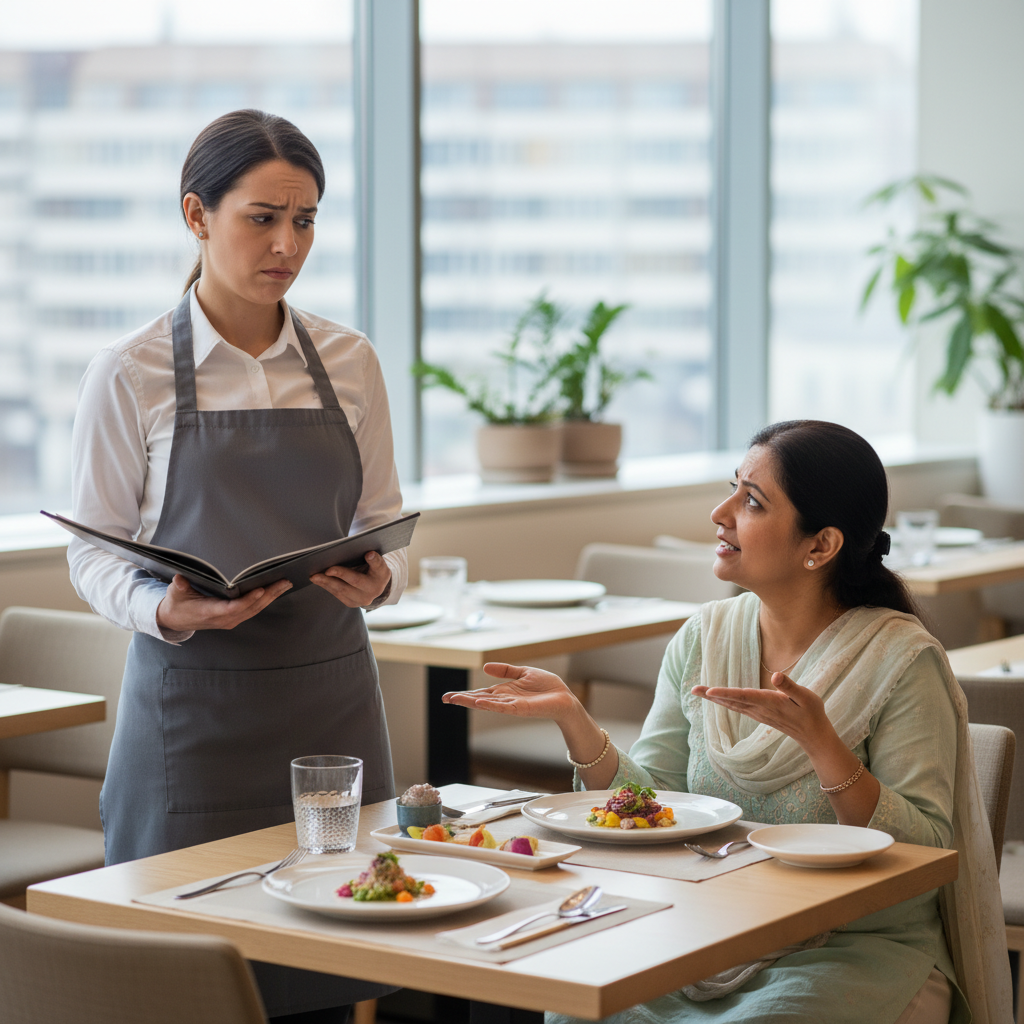
You've sat down at a restaurant, scanned the menu, and then comes the moment: you need to explain that you can't eat onion or garlic. You phrase it carefully. The server nods. And then your dish arrives smelling unmistakably of both.
If you follow a Jain diet, or simply avoid alliums for personal, spiritual, or health reasons, this scenario probably feels frustratingly familiar. The no onion no garlic restaurant request is one of the most consistently misunderstood dietary preferences in dining spaces worldwide. It crosses cultural lines, challenges kitchen assumptions, and exposes a gap in how restaurants communicate about ingredients.
Understanding why this happens, and what you can do about it, starts with understanding the full picture.
What the Jain Dietary Tradition Actually Requires
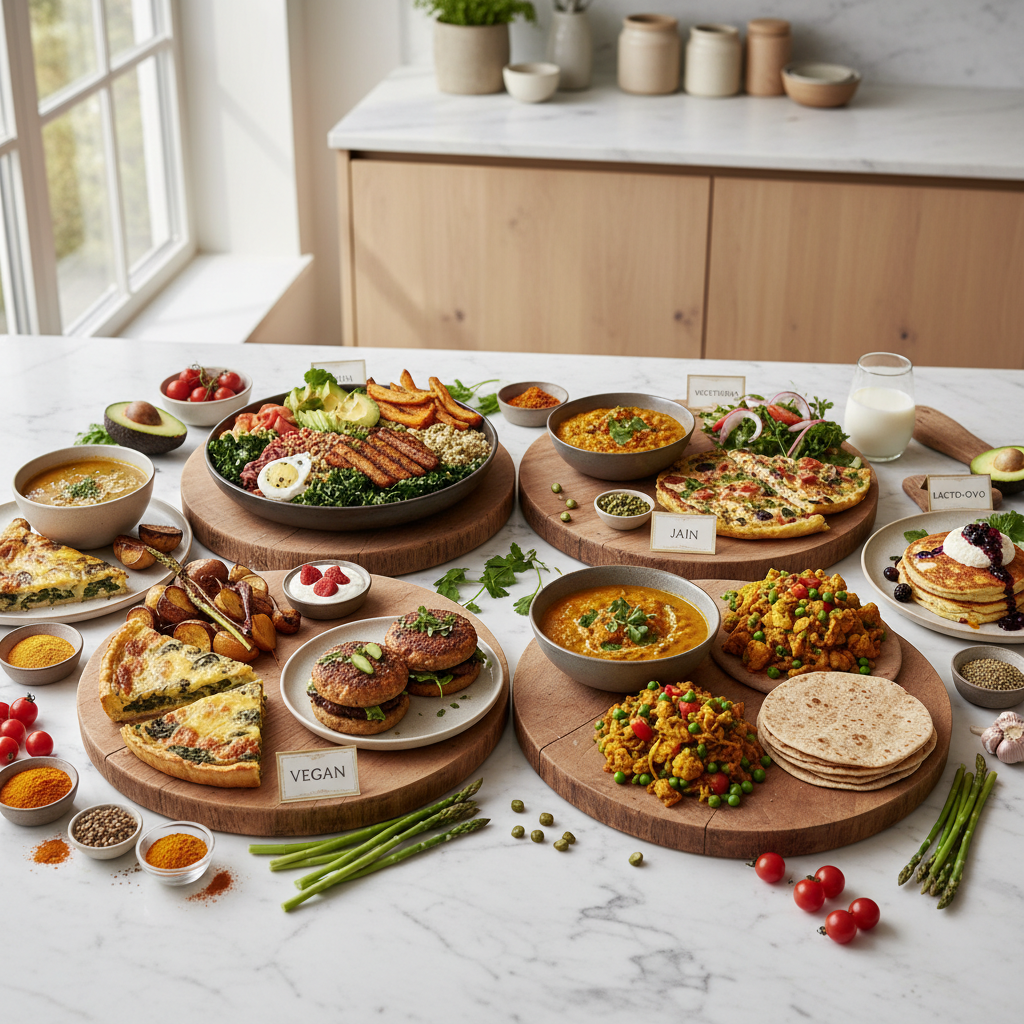
Jainism is one of the world's oldest religions, with a philosophical commitment to non-violence (ahimsa) at its core. The dietary rules that emerge from this principle are precise and meaningful. Jain practitioners avoid not just meat and fish, but also root vegetables and underground produce, including onions, garlic, potatoes, carrots, and radishes.
The reasoning is rooted in the belief that uprooting these vegetables destroys entire plants and the microorganisms living in the soil around them. Onion and garlic carry additional concern because they are thought to stimulate base emotions and disrupt spiritual equilibrium.
What "No Allium" Actually Covers
When a diner making a Jain no allium dining request sits down, they're not just asking for a dish without visible onion rings or roasted garlic. The restriction includes:
- Raw onion and cooked onion in any form
- Garlic cloves, garlic powder, and garlic-infused oils
- Spring onions, shallots, and leeks
- Chives and asafoetida in some traditional interpretations
- Stocks, sauces, and marinades made with any of the above
That last point is where most kitchen confusion begins. A chef might genuinely remove visible onion from a dish while the base sauce was cooked with onion from the start. They aren't being careless. They simply don't understand that the restriction goes all the way down to the foundation of the dish.
Why Restaurant Staff Genuinely Struggle With This Request
The difficulty isn't purely about cultural awareness, though that plays a role. There are structural reasons why restaurant staff understanding Jain dietary needs is harder than it looks.
Training Doesn't Cover Cultural Dietary Practices
Most front-of-house training in restaurants globally focuses on the major eight allergens recognized by food safety bodies: milk, eggs, fish, shellfish, tree nuts, peanuts, wheat, and soybeans. Onion and garlic don't appear on those lists because they aren't common allergens in a clinical sense. So staff learn to ask about nut allergies and gluten sensitivity. They don't receive the same prompts around Jain dietary communication or other culturally specific restrictions.
This isn't negligence. It's a gap in how dietary training is structured across the industry.
The Language Barrier Goes Both Ways
In multicultural dining environments, particularly across Asia, the Middle East, and in diaspora communities globally, the phrase "no onion no garlic" is understood within its cultural context. But walk into a French bistro, a Brazilian churrascaria, or a modern European restaurant, and the phrase may simply not compute. Staff may interpret it as a preference rather than a firm requirement, or assume it applies only to raw garnishes.
There's also the matter of culinary vocabulary. When a diner says "no onion no garlic," they often mean no alliums of any kind. A server hears that and relays it to the kitchen as "no visible onion." The chef hears it and thinks "swap the garnish." The gap between what's said and what's understood can span the entire table.
Menus Don't Reflect Reality
Most restaurant menus list primary ingredients and little else. The actual composition of a dish, including its base, its stock, its marinade, and its sauce, rarely appears in menu descriptions. A pasta listed as "tomato, basil, parmesan" almost certainly contains garlic. A soup called "roasted pepper bisque" very likely started with a sautéed onion base. The menu doesn't tell you that, and neither does the server, because neither has memorized every sub-ingredient in every dish.
This is the core problem outlined in our nutrition and dining content: menus show you the headline, not the whole story.
Where Onion and Garlic Hide on Restaurant Menus
For anyone navigating onion garlic cultural cuisine restrictions, knowing where these ingredients hide is as important as knowing how to ask. Garlic and onion are foundational aromatic bases in nearly every culinary tradition worldwide.
Cuisine Type | Common Onion/Garlic Sources | Risk Level |
|---|---|---|
Italian | Pasta sauces, risottos, bruschetta, stocks | High |
French | Stocks, soups (French onion), vinaigrettes, roux bases | High |
South Asian | Curries, masalas, biryani, dals, chutneys | Very High |
Chinese | Stir-fry bases, sauces, broths, dumplings | High |
Mexican | Salsas, mole, rice, refried beans | High |
Middle Eastern | Hummus, falafel, marinades, pilafs | Medium to High |
Japanese | Ramen broth, yakitori marinade, tare sauces | Medium |
The challenge isn't just identifying visible onion. It's recognizing that garlic powder is a standard seasoning in spice blends, that many commercial stocks contain onion extract, and that certain sauces are built on an onion-forward foundation that can't simply be removed after the fact.
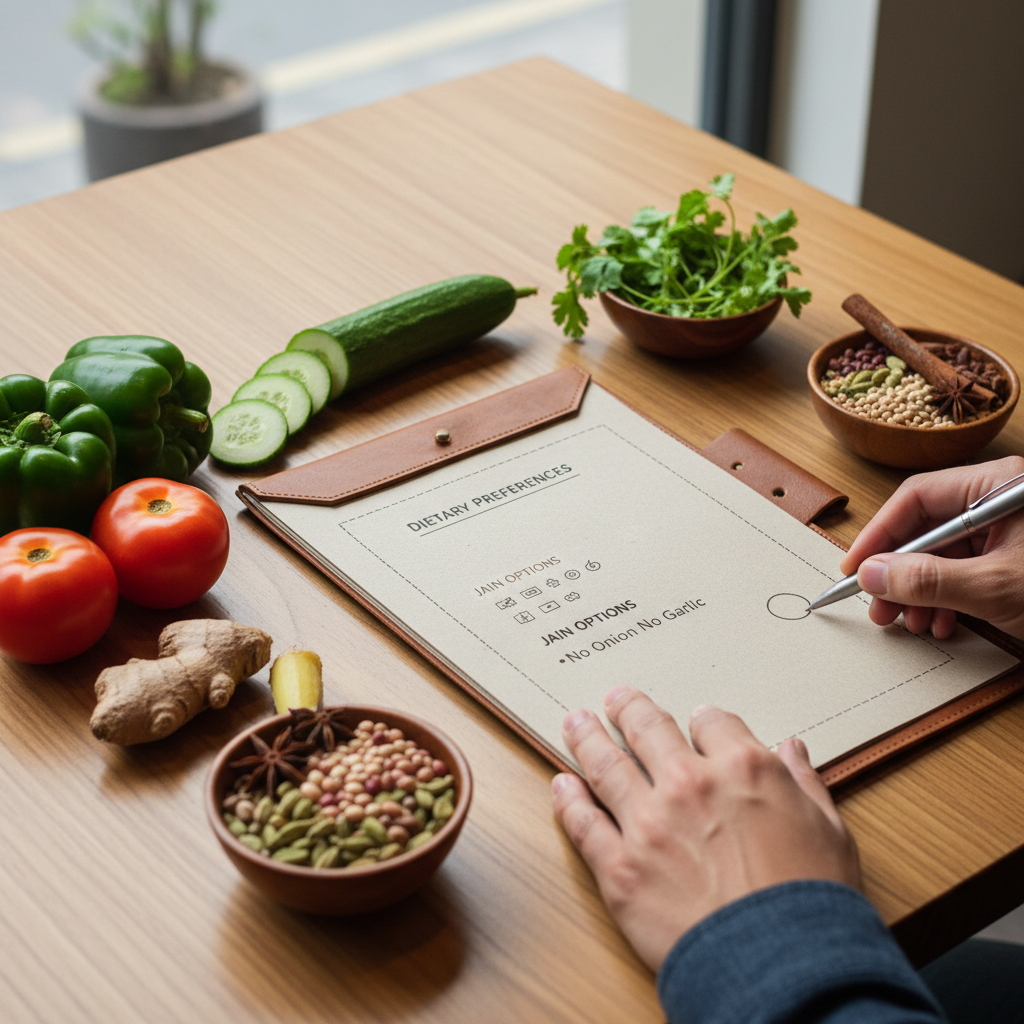
The Processed and Packaged Problem
Even restaurants that cook from scratch often use commercial sauces, dressings, and condiments. Many of these contain onion or garlic in processed forms, listed in small print as "dehydrated onion," "garlic flavoring," or simply "spices." Recognizing these patterns across different menu contexts is part of what makes navigating complex dietary requirements so demanding in real dining scenarios.
Understanding hidden ingredients in food is something health-conscious consumers increasingly care about. Resources focused on common food additives and their presence in everyday foods highlight just how frequently flavor-enhancing compounds appear where diners wouldn't expect them.
The Real Cost of Being Misunderstood at the Table
For someone with a no onion no garlic restriction rooted in religious practice, consuming these ingredients is a matter of spiritual integrity, not just preference. Being served food that contains them, even inadvertently, causes real distress. It undermines trust. It makes the dining experience stressful rather than enjoyable.
For people who avoid alliums for health reasons, such as those with irritable bowel syndrome (IBS), fructose malabsorption, or sensitivity to FODMAPs, consuming garlic or onion can trigger significant physical symptoms. This isn't a minor inconvenience. It can mean hours of discomfort.
The emotional weight of repeatedly explaining the same restriction, feeling unheard, and then discovering the food isn't safe is significant. Studies on food allergies and dietary restrictions consistently note that the anxiety around dining out can be as impactful as the physical risk itself. Research from food allergy advocacy organizations points to how profoundly dining anxiety affects quality of life for those managing strict dietary needs.
A Counterargument Worth Acknowledging
To be fair to restaurant staff: the sheer volume of dietary requests has increased dramatically in recent years. Servers are managing allergen inquiries, vegan and plant-based requests, low-carb preferences, religious food laws, and individual texture sensitivities, all during a busy dinner service. It's genuinely difficult to keep track of every possible dietary framework without structured support.
Some kitchens are doing their best with limited information. The problem isn't always indifference. Often, it's the absence of the right tools and training to bridge the gap between what diners need and what the kitchen can confidently deliver.
How Diners Can Communicate More Effectively (and Where Technology Helps)
Improving outcomes at the restaurant table requires meeting the challenge from both sides. Diners can take steps to communicate more precisely, and increasingly, technology is stepping in to close the gap entirely.
Practical Communication Strategies
- Be specific about the full scope of your restriction. Instead of "no onion no garlic," say "I avoid all onion, garlic, shallots, and leeks, including in sauces, stocks, and marinades."
- Ask about the base of each dish, not just the listed ingredients.
- If the restaurant has a chef, request to speak with them directly for high-stakes meals.
- Check menus in advance online when possible, so you arrive with knowledge rather than questions.
- Carry a small card in the local language if you're dining in a country where you don't speak the primary language.
Where AI Changes the Equation
Communicating a restriction clearly at the table is helpful. But having reliable, instant information about what's actually safe on a given menu, before you even sit down, is better. That's exactly what we built AlignEat's AI menu analysis tool to do.
Rather than relying on servers to accurately recall sub-ingredients or chefs to reformulate dishes on the fly, AlignEat scans restaurant menus from anywhere in the world and identifies which dishes align with your specific dietary profile. If you follow Jain dietary guidelines, the tool flags dishes that are likely to contain hidden alliums, including processed forms and common base ingredients, so you can make a confident choice before ordering.
This isn't just about convenience. For diners navigating why restaurants struggle with allium-free requests, having access to reliable menu intelligence means the difference between a stressful guessing game and a genuinely enjoyable meal.
You can explore the full detail of how this works on our complete feature breakdown page.
Looking Ahead: The Future of Dietary Inclusion in Dining
The restaurant industry is gradually moving toward more transparent ingredient labeling. Digital menus, QR-linked ingredient databases, and AI-assisted ordering systems are all becoming more common in forward-thinking establishments. As these tools proliferate, the friction around culturally specific dietary needs like Jain restrictions will reduce meaningfully.
We also expect to see broader cultural dietary literacy built into hospitality training, particularly as global travel and diaspora dining communities grow. A server in London or São Paulo being conversant in Jain dietary principles isn't a distant possibility. It's a natural evolution as the world's dining culture becomes more interconnected.
AI tools will play a central role in this shift. Real-time menu translation and ingredient analysis will become standard for diners who need it, removing the burden of explanation from individuals and placing it appropriately on technology that can handle the complexity at scale.
Conclusion
The confusion around a no onion no garlic restaurant request isn't a failure of goodwill. It's a structural gap between how restaurants are trained, how menus are written, and how deeply specific dietary frameworks like Jain dining actually run. Garlic powder in a spice blend, onion in a stock, shallots in a sauce reduction: these aren't visible on the menu, and they're rarely top of mind for kitchen staff managing dozens of tables.
For Jain diners and anyone navigating allium-free eating, understanding this gap is the first step toward navigating it better. The second step is using tools that don't leave safety to chance. At AlignEat, we believe that knowing what's in your food shouldn't require a conversation that feels like an interrogation. It should be simple, clear, and stress-free, every time you sit down to eat.
Frequently Asked Questions
Is "no onion no garlic" the same as a food allergy?
Not in the clinical sense. For most Jain diners, avoiding onion and garlic is a religious and ethical practice, not a medical allergy. For others, such as people with IBS or FODMAP sensitivities, consuming these ingredients can cause real physical symptoms. Regardless of the reason, the restriction deserves the same level of care and attention as any allergy-based request. The challenge is that restaurant allergy protocols are designed around recognized clinical allergens, which means onion and garlic restrictions often fall outside standard staff training frameworks.
Why does garlic powder create problems even when visible garlic is removed?
Garlic powder is a concentrated form of garlic used in spice blends, dry rubs, seasoning mixes, and commercial sauces. It carries the same spiritual and digestive implications as fresh garlic for those with strict restrictions. When a kitchen removes visible garlic from a dish but uses a spice blend or commercial condiment containing garlic powder, the restriction is still violated. This is one of the most common hidden ingredient issues in restaurant dining, and it's why a specific request for "no garlic in any form, including powders and seasonings" is more effective than a general "no garlic" instruction.
How can technology help Jain diners navigate restaurant menus more reliably?
AI-powered menu analysis tools can scan restaurant menus and cross-reference dishes against a specific dietary profile, including Jain restrictions covering all alliums in all forms. Rather than relying on verbal communication and hoping the message gets through accurately to the kitchen, diners can use tools like AlignEat to identify safe options before ordering. This removes the guesswork, reduces dining anxiety, and makes the experience far more reliable, especially in international settings where cultural dietary literacy may be limited among restaurant staff.